


Adult Venison & Potato All Breed, 11.5 kg
For klinikker og forhandlere
Sælg den ved skranken. Engrospris og avance efter login.
- Crude protein 27%
- Grain-free & gluten-free
- Single protein (venison)
Purchase requires a B2B account
We only sell to veterinarians, clinics and retailers. Log in with your B2B account to see trade prices and order.
Create a B2B accountLog inOfficial feeding table
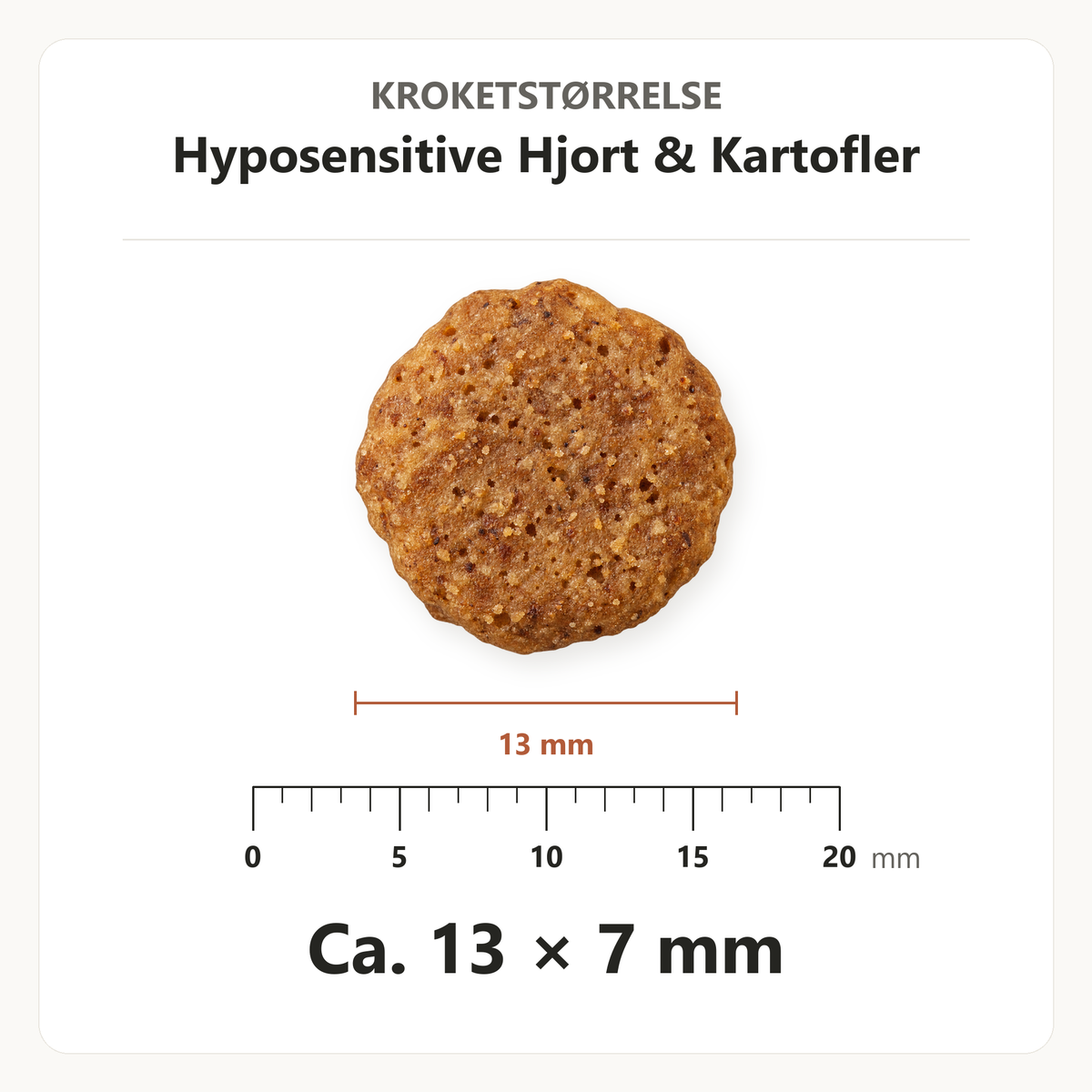
Dr.Clauder's Hyposensitive Venison & Potato 11.5 kg — grain-free monoprotein food with a single animal protein source and a single carbohydrate. Venison is a less common protein source in most dogs' diets, and of the Hyposensitive variants, Venison & Potato has the lowest protein content. The 11.5 kg bag is for regular feeding once you know your dog does well on the food.
Monoprotein with venison • Grain-free & gluten-free • Single carbohydrate • 500 g fresh meat per kg
Which protein source suits your dog?
The core of the Hyposensitive range is always the same: a single animal protein source and potato as the carbohydrate. The difference is the protein source. Here is a simple guide to choosing the variant that suits your dog best.
| Situation | Typical choice |
|---|---|
| Your dog has tried many protein sources — chicken, beef, lamb — without lasting effect | Venison & Potato |
| You want a fish-based monoprotein food | Salmon & Potato |
| You want both the animal protein and the animal fat to come from fish | Herring & Potato |
| You want a mild protein source with a different flavour profile from chicken | Duck & Potato — duck is still poultry |
| Your dog is a small breed | Duck Mini |
New to Venison & Potato?
The 11.5 kg bag is for regular feeding once you know your dog does well on the food. If you haven't tried Venison & Potato before, we recommend starting with 3.5 kg first.
- Start carefully with a smaller size
- Same recipe whatever the bag size
- Move up to 11.5 kg once you know the food suits your dog
What can you keep an eye on during the switch?
There is no guarantee and no fixed timeline. But when you switch to a simpler feeding line, it can help to watch the same things over time.
Many people start here. Watch whether the stomach seems calmer and whether stools become more stable in the weeks after the transition.
Many choose monoprotein because their dog licks its paws, scratches or rubs its ears. It takes time. Give it at least 8 weeks — and don't switch treats along the way.
Coat and skin are usually the last to change and the slowest to assess. Follow them over 1.5–2 months.
For many, it is about making feeding easier to manage: one food, one protein direction and fewer things to guess at.
Every dog is different. The above are things to watch — not medical promises.
Stick to the same protein source
When you choose monoprotein, it makes sense to keep food and treats to the same protein source. Treats with other protein sources make it harder to judge whether the food is working.
The venison range
Ingredients
Complete food for adult dogs.
Potato flour 47%, venison protein (dried) 15%, potato protein, dried beet fibre, venison meat 5%, poultry fat, linseed, vegetable protein hydrolysate, monocalcium phosphate, potato starch, fish oil, Dr.Clauder's Pro Digest 5 Complex 0.75% (yeast, papaya powder, pineapple powder, cranberry powder, yeast beta-glucans, inulin (FOS), spirulina powder, hemp flour), chicory powder 0.73%, yeast (dried, of which 0.05% glucans), calcium carbonate, sodium chloride, safflower (thistle) oil.
Analytical constituents
| Crude protein | 27% |
| Crude fat | 10% |
| Crude fibre | 3.2% |
| Crude ash | 6.9% |
| Calcium | 1.05% |
| Phosphorus | 0.8% |
| Sodium | 0.2% |
Additives per kg
Nutritional additives:
Vitamin A 12,000 IU, vitamin D3 (3a671) 1,200 IU, vitamin E 70 mg, vitamin B1 10 mg, vitamin B2 12 mg, vitamin B6 7 mg, vitamin B12 70 mcg, vitamin C 70 mg, biotin 250 mcg, folic acid 1 mg, niacin 40 mg, calcium D-pantothenate 30 mg, choline 1,770 mg, copper (as copper(II) sulphate pentahydrate) 10 mg, zinc (as zinc oxide) 70 mg, zinc (as zinc chelate of amino acids, hydrate) 30 mg, iodine (as calcium iodate, anhydrous) 2 mg, selenium (as sodium selenite) 0.2 mg.
Technological additives:
Antioxidants: EU-approved additives (tocopherol-rich extracts of natural origin and propyl gallate).
Daily feeding guide
| Dog's weight | Daily amount |
|---|---|
| 2.5–5 kg | 55–95 g |
| 7.5–10 kg | 125–155 g |
| 12.5–15 kg | 185–215 g |
| 17.5–20 kg | 240–265 g |
| 22.5–25 kg | 290–315 g |
| 30–35 kg | 360–400 g |
| 40–45 kg | 445–485 g |
| 50–60 kg | 525–605 g |
| 70–80 kg | 675–750 g |
| 90–100 kg | 815–885 g |
Base the amount on your dog's ideal weight. A very active dog may need a little more, a calm dog a little less. Ideally split the daily amount into two meals, and always provide fresh water.
Switching to a new food
Never change dog food abruptly. Take 7–10 days for the transition:
- Days 1–3: 25% new food, 75% old
- Days 4–6: 50% new food, 50% old
- Days 7–9: 75% new food, 25% old
- Day 10: 100% new food
Give the food at least 8–12 weeks before deciding whether it suits your dog.
Frequently asked questions
How long should I give the food?
At least 8 weeks — ideally 12. That time frame gives you a real basis for judging whether the food suits your dog. The stomach usually settles first; itching and coat take longer.
What is the difference between hyposensitive and sensitive dog food?
Hyposensitive food has only one animal protein source and a single carbohydrate, so the composition is easy to keep track of. Sensitive food is a gentle everyday food for dogs with sensitive digestion, but it is not a monoprotein food.
What should I do about treats?
Treats with protein sources other than the dry food can make it harder to judge whether the food is working. Use treats from the same range — Allergy Treats Venison and Mini Snacks Venison keep the composition simple.
The stools look different in the first few weeks. Is that normal?
Yes. Switching to a new food can temporarily change the appearance and consistency of the stools. In most dogs this settles within 2–4 weeks.
When does the 11.5 kg bag make sense?
When you already know your dog does well on Venison & Potato and want to feed it regularly. If the food is new, start with 3.5 kg. For large dogs, 20 kg is the most economical bag.
Have questions about which variant suits your dog best? Write to us – we're happy to help.

Products with the same protein
 Treat · Trainee SnackVenison, 80 g95%venison30%proteinSingle animal source (venison) • Gently steam-dried • For dogs and catsRRPRRP 69,00 kr
 Treat · Trainee MiniMini Venison, 50 g95%venison30%proteinSingle animal source (venison) • Gently steam-dried • For dogs and catsRRPRRP 49,00 kr
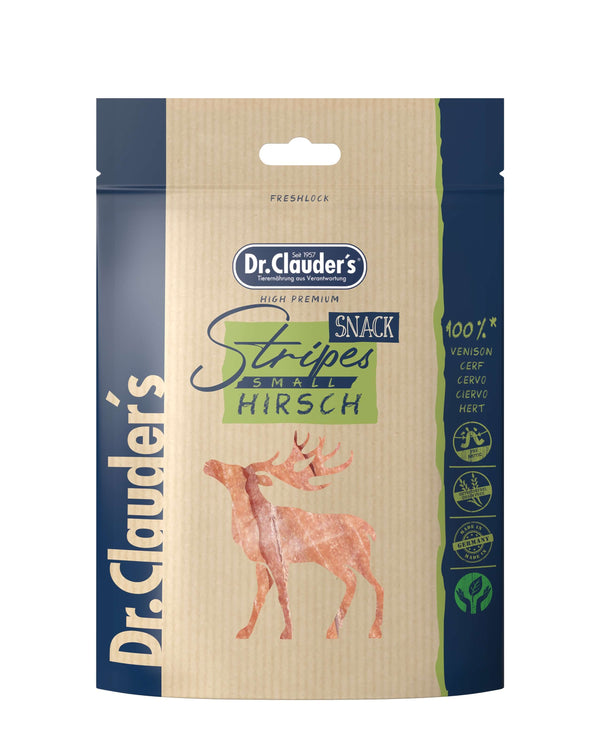 Treat · Filet StripsVenison, 80 g95%venison30%proteinSingle meat source (venison) • Steam-dried strips • With inulin (FOS)RRPRRP 69,00 kr
 Adult · Selected MeatVenison & Potato88%meat (44% venison)6%fatCrude protein 10% • Venison, duck & pork • With potato & salmon oilRRPRRP from 24,00 kr


